Laser Precision Cutting of Magnetic Steel Sheets: Achieving "Accurate Cutting and Low Loss" for Every Core Lamination
In magnetic devices such as motors, transformers, and inductors, those thin sheets of magnetic steel may seem inconspicuous, but they are one of the key factors determining efficiency, noise levels, and temperature rise. No matter how excellent the grade of the selected material is, poor processing procedures—especially inadequate control over the cutting process—can significantly compromise magnetic performance.
While traditional shearing and stamping processes are well-established, they are increasingly unable to fully meet the requirements of small-batch production, high product variety, high precision, and rapid prototyping. As a result, laser precision cutting of magnetic steel sheets has gradually come to the forefront, emerging as a focal point of process development in industries such as motors and transformers.
Magnetic steel sheets (including grain-oriented silicon steel, non-grain-oriented silicon steel, high-silicon steel, soft magnetic alloy thin plates, etc.) share several common characteristics:
Ultra-thin GaugeTypical thickness ranges from approximately 0.1 to 0.5 mm, and steels used for high-frequency applications are even thinner.
→ Thin sheets are highly prone to warping, edge collapse, and burr formation during cutting.
Magnetic Performance Highly Sensitive to Processing StressCold working hardening, residual stress, and microstructural changes can all lead to increased iron loss and reduced magnetic permeability.
→ Rough shearing or improper die stamping can easily "damage magnetic performance".
Edge Quality Affects Overall Core PerformanceExcessive edge burrs can pierce the insulating coating, causing interlayer short circuits;
Misaligned laminations and severe edge deformation will result in increased noise and energy loss.
Therefore, for magnetic steel sheets, "how to cut" is not just a matter of achieving the desired geometric shape—it is more crucially related to energy efficiency, noise, and service life. It is against this backdrop that laser precision cutting has garnered widespread attention.
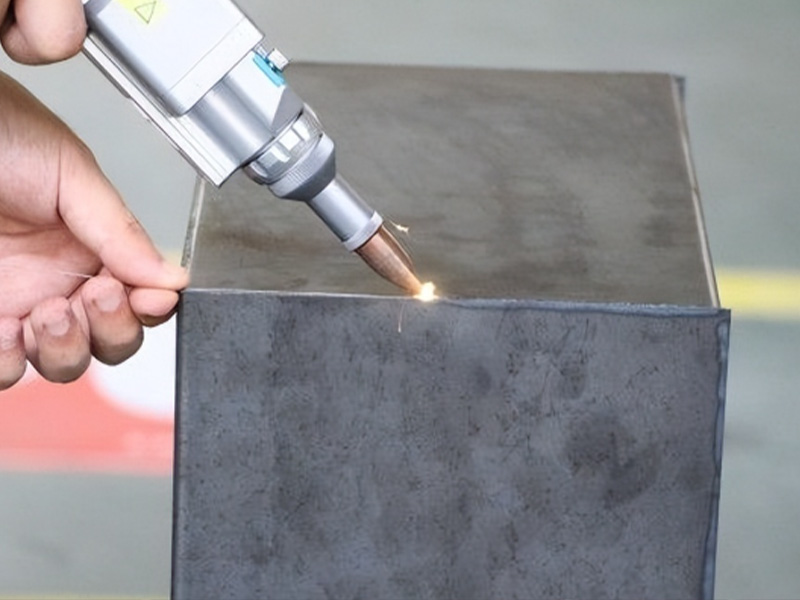
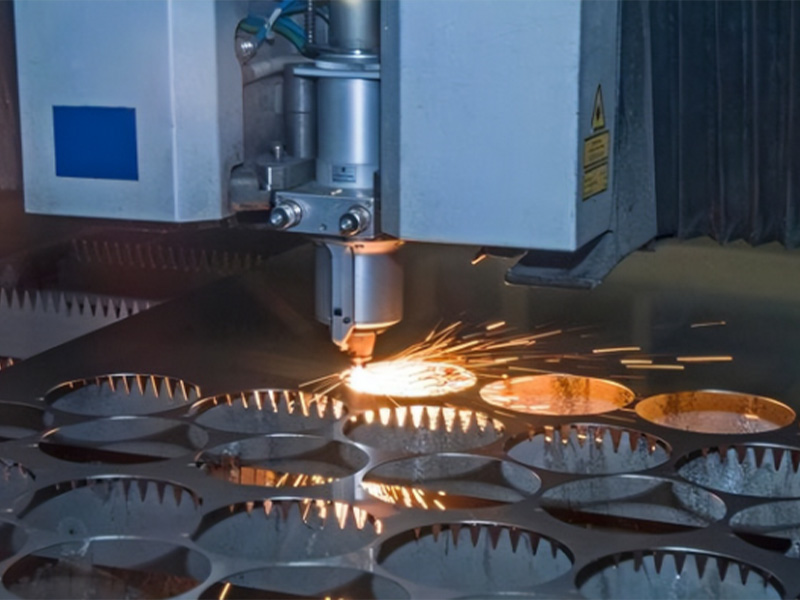
Laser precision cutting of magnetic steel sheets is essentially a thermal cutting method utilizing high energy density:
- A laser emits a high-energy beam, which is focused onto the steel sheet surface through an optical system;
- The energy density at the focal point is extremely high, causing the local area to melt or even vaporize instantaneously;
- An auxiliary gas (such as nitrogen or air) blows the molten metal out of the kerf, creating a narrow and relatively smooth cut;
- A numerical control (NC) system controls the movement path of the laser spot to achieve precise cutting of complex contours.
Key parameters for laser precision cutting include:
- Laser type and power (e.g., fiber laser, suitable power level);
- Laser spot diameter and focal position;
- Cutting speed, acceleration, and corner deceleration strategy;
- Type and pressure of auxiliary gas;
- Pulsing mode (continuous/pulsed) and duty cycle, etc.
For magnetic steel sheets, the core objectives are: ensuring complete and accurate cutting while minimizing the heat-affected zone (HAZ) and degradation of magnetic properties.
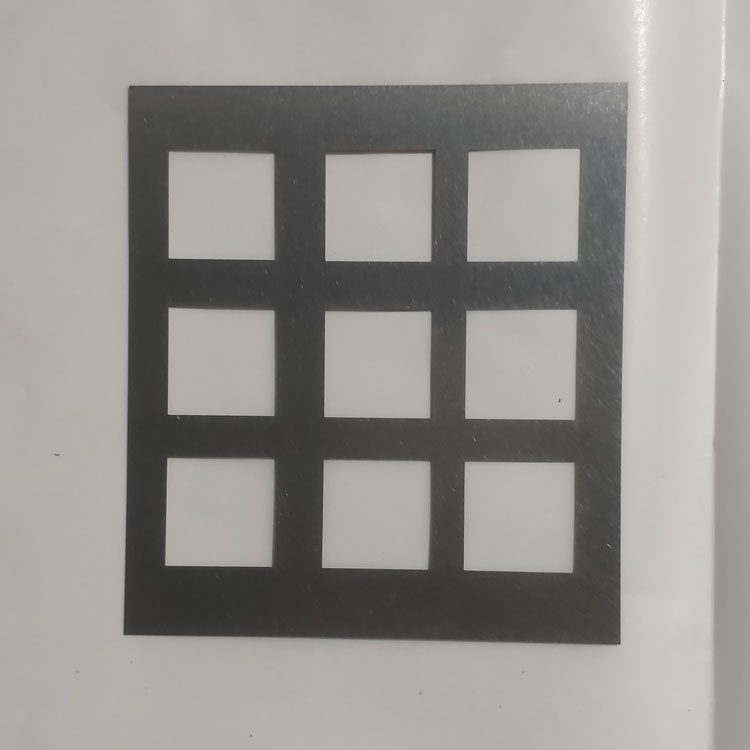
Traditional stamping requires mold manufacturing and adjustment, which involves significant investment and is inconvenient to modify.
In contrast, laser precision cutting offers the following benefits:
- Direct processing by importing CAD drawings;
- Design modifications only require adjusting the program without altering molds;
- Particularly suitable for prototype development, small-batch production, high product variety, and projects requiring frequent design changes.
This represents a major advantage for R&D prototyping, motor scheme validation, and high-end customized small-batch orders.
The narrow laser kerf and high path controllability make it ideal for:
- Complex tooth profiles of high-pole-count motors;
- Multi-slot, multi-hole, and irregular geometric structures;
- Special structures that are difficult or cost-prohibitive to produce via traditional stamping.
This provides greater freedom for optimizing motor slot shapes and transformer magnetic circuit configurations.
Laser cutting is a non-contact processing method, unlike shearing and stamping which involve intense extrusion of the material:
- Minimizes the shear deformation zone and cold-worked hardening layer;
- Eliminates issues such as tearing and edge collapse caused by improper mold clearance.
From the perspective of "mechanical stress", laser precision cutting offers more controllable material damage compared to rough stamping processes.
Despite its obvious advantages, laser cutting of magnetic steel sheets also presents several challenges that require careful addressing.
Laser cutting is ultimately a thermal process, so a heat-affected zone (HAZ) is inevitably formed around the kerf, which may lead to:
- Local microstructural changes;
- Redistribution of residual stress;
- Decreased magnetic permeability and increased iron loss.
Poor process control resulting in an excessively wide HAZ can manifest as higher energy loss and excessive temperature rise after the entire core is laminated.
Improper use of auxiliary gas can easily cause:
- Significant oxidation at the kerf;
- Burning and peeling of the surface insulation coating;
- Degraded interlayer insulation performance after lamination.
Therefore, inert gases such as nitrogen, or validated high-pressure air solutions, are often preferred in laser precision cutting of magnetic steel sheets to minimize oxidation and coating damage.
Although laser cutting theoretically produces minimal burrs, unstable equipment conditions, contaminated optical paths, or improper parameter settings can easily lead to:
- Dross adhesion and irregular micro-burrs;
- Substandard cut surface roughness.
These issues can affect lamination alignment, as well as core vibration and noise performance.
To fully realize the "precision" value of this process, meticulous attention to detail is essential.
This includes but is not limited to:
- Focal position: The position of the focal point within the sheet thickness affects kerf shape, roughness, and dross formation;
- Power-speed matching: Excessively high power with low speed widens the HAZ; insufficient power with high speed may cause incomplete cutting or severe dross;
- Pulse characteristics: In pulsed mode, optimized frequency and duty cycle help reduce heat accumulation;
- Deceleration strategy for corners and details: Appropriate speed reduction in small structures and sharp corner areas prevents overheating or incomplete cutting.
Typically, repeated sample testing is required, comparing cut surface quality and magnetic performance test results to establish a parameter library suitable for specific materials and thicknesses.
For magnetic steel sheets, the following recommendations are prioritized:
- Use nitrogen for cutting to reduce oxidation and coating damage;
- Prioritize quality when cost permits;
- Ensure stable gas pressure and flow direction to effectively remove molten dross.
For products with extremely high sensitivity to magnetic performance, customized gas path solutions are designed to balance cutting efficiency and magnetic property preservation.
Laser precision cutting is highly dependent on equipment condition:
- Maintain clean optical fibers and lenses;
- Ensure accurate calibration of optical path coaxiality and focal length;
- Preserve the precision and rigidity of transmission mechanisms (guide rails, ball screws, etc.).
Regular maintenance and calibration can significantly improve kerf consistency and repeat positioning accuracy.
For high-end products with stringent requirements, the following post-processing steps may be considered:
- Light deburring and dross removal;
- For high-grade magnetic materials, evaluate the need for low-temperature annealing to relieve stress (fully demonstrating its impact on coating and dimensional stability);
- Repair locally damaged coating areas or add additional insulation treatments.
Such as new energy vehicle motors, high-speed motors, servo motors, etc.:
- Often require rapid validation of different tooth profiles and pole-slot combinations;
- Laser precision cutting can drastically shorten the prototyping cycle;
- Ensures geometric accuracy while treating magnetic properties gently during the performance validation phase.
For transformer cores with customized shapes, special window structures, and complex magnetic circuits:
- Die development costs are high and lead times are long;
- Laser cutting can flexibly achieve various special shapes and hole configurations.
For example, magnetic components made of high-value materials such as permalloy and high-silicon steel:
- The materials themselves are expensive, and production volumes are relatively limited;
- Laser precision cutting reduces mold investment and enables more precise control of material waste.
As industry requirements for energy efficiency and noise reduction continue to rise, laser precision cutting of magnetic steel sheets is constantly evolving:
Smarter Parameter ControlLeveraging sensors and software algorithms to real-time adjust laser power, focal position, and cutting speed, achieving consistent cut quality and HAZ control.
Integration with Simulation and DesignIncorporate "cutting process effects" into motor and electromagnetic field simulations, enabling collaborative optimization of slot shapes and processing techniques from the design stage.
Specialized Process Packages and Material Matching DatabasesDevelop mature laser process packages for different grades and thicknesses of magnetic steel sheets, making processing outcomes more predictable.
Integration with Automatic Lamination and InspectionConnect laser cutting with subsequent lamination, bonding, inspection, and packaging processes to form a flexible production line, realizing a rapid closed-loop workflow from design drawings to finished magnetic cores.
Laser precision cutting of magnetic steel sheets is not merely replacing "scissors" with "laser beams". Instead, it strives to achieve two goals with higher precision and control:
- Geometrically: Ensure accurate dimensions, intricate contours, and minimal burrs;
- Magnetically: Achieve controllable HAZ and acceptable or even negligible increases in energy loss.
Only by designing processes and refining parameters based on a deep understanding of material characteristics and magnetic performance requirements can laser precision cutting truly become a reliable processing method behind high-performance motors, transformers, and magnetic devices—rather than just being a piece of equipment that "cuts steel sheets".

 400-8188-860


 2025-11-28
 Changshan Precision
 400-8188-860





 Home
Home