400-8188-860
400-8188-860


Stay updated on industry insights and follow Chanshan Precision's latest developments
 2025-11-28
 Changshan Precision
What are the causes of burrs in laser cutting? Laser cutting is a laser-based technology that is widely used in industrial production.
However, if the laser beam is not focused on the workpiece, a sharp angle will form at the laser focal point. Insufficient laser energy will prevent the beam from being focused onto the workpiece, which means the laser energy cannot be transferred to the workpiece. When the heat generated after laser focusing is not enough to melt the material, burrs will occur.
Note: The statement "metals cannot be melted" is technically inaccurate. Revised for rationality: Metals can be melted under proper conditions. Therefore, the appearance of burrs during laser cutting indicates insufficient laser energy.
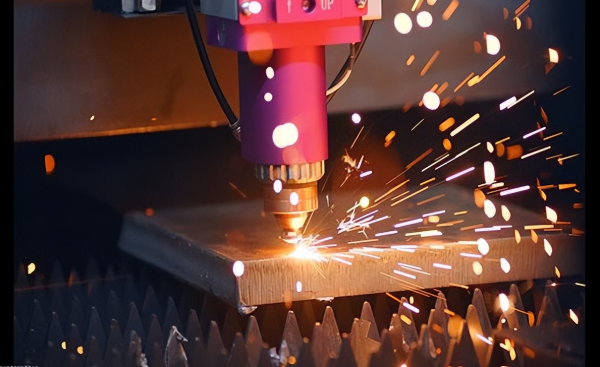
Another scenario is that the burrs generated during cutting are excessively large. When oversized burrs appear in laser cutting, it indicates insufficient laser energy or an overly large heat-affected zone caused by excessively high cutting speed. Selecting an excessively low processing speed (e.g., 1 mm/s) for cutting may also lead to burr formation.
To avoid the formation of burrs, it is necessary to ensure that the laser beam can be accurately focused on the workpiece. Insufficient laser beam energy or excessively high cutting speed during the process may result in an oversized heat-affected zone or the generation of burrs.
 400-8188-860
130-3889-2257

Scan the QR Code

WeChat Official Account
Copyright © 2025 Dongguan Chanshan Precision Technology Co., Ltd. All Rights Reserved
Technical Support:sysx



 Home
Home